
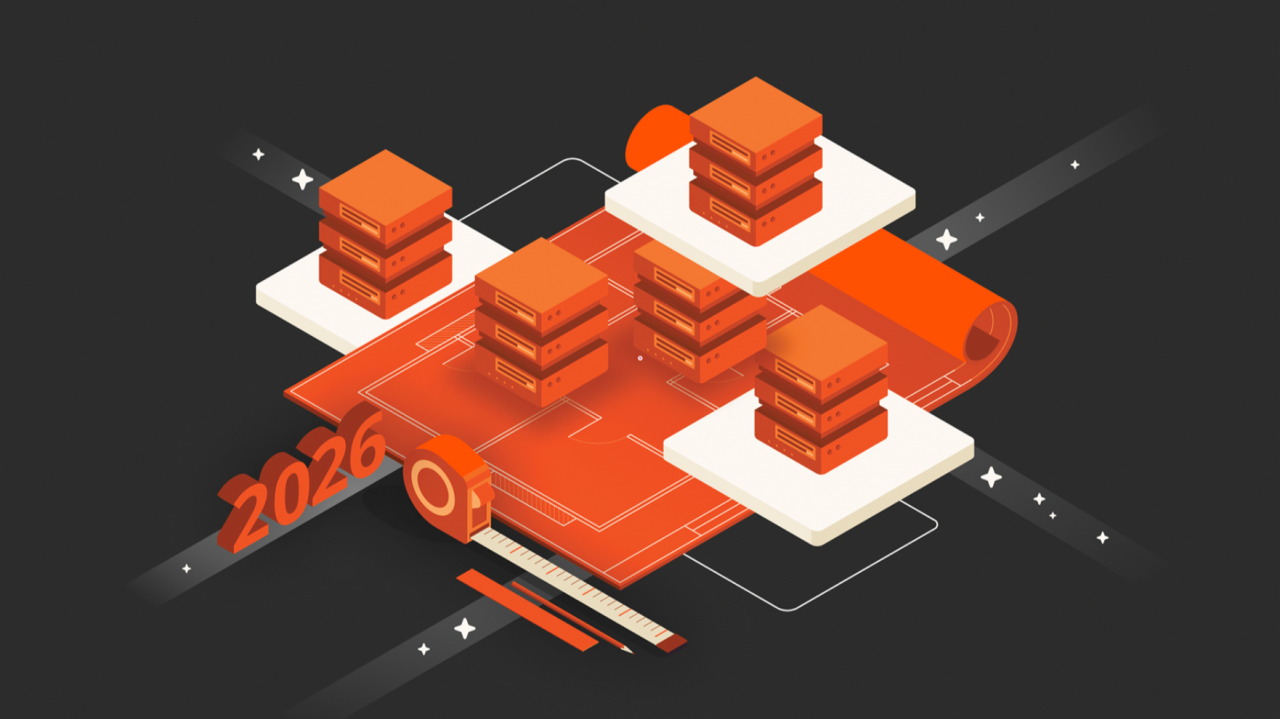
Why 2026 Will Be the Year of Unified Data Architecture

For years, enterprises have invested in data warehouses, data lakes, cloud platforms, streaming systems, analytics tools, and increasingly, AI infrastructure. Yet many organizations still face the same fundamental problem: their data is everywhere, but their intelligence is fragmented.
In 2026, that model is beginning to change.
The rise of generative AI and AI agents is forcing organizations to rethink how data is stored, governed, accessed, and activated. AI systems cannot deliver reliable business outcomes when critical information is trapped across disconnected databases, applications, documents, cloud environments, and departmental silos.
This is why 2026 is shaping up to be the year of unified data architecture.
Rather than treating the data warehouse, lakehouse, data mesh, real-time pipelines, semantic layers, and AI infrastructure as separate initiatives, enterprises are increasingly bringing them together into a more connected architecture.
The Data Problem Has Become an AI Problem
Traditional analytics could tolerate some degree of fragmentation.
A reporting team might wait for an overnight ETL pipeline. A business analyst could work from a curated warehouse. A data scientist could extract a dataset and build a model around it.
AI agents operate differently.
An AI system making a recommendation, answering a customer question, detecting fraud, or automating a workflow may need access to current transactional data, historical analytics, documents, business rules, and organizational context—all at the same time.
IDC notes that enterprises are increasingly rethinking architectures around real-time data and converged workloads because AI agents depend on current operational and analytical context.
The result is a new architectural requirement:
Data must be connected before intelligence can be truly connected.
From Data Silos to a Unified Data Layer
For much of the last decade, enterprises solved data problems by adding another platform.
Need analytics? Build a warehouse.
Need large-scale storage? Add a data lake.
Need real-time processing? Add a streaming platform.
Need machine learning? Add a feature store.
Need generative AI? Add vector databases and retrieval systems.
Each solution can be useful. The problem is what happens between them.
Data gets copied from one system to another. Pipelines multiply. Metadata becomes inconsistent. Governance rules are implemented differently across platforms. Teams spend significant time moving and reconciling data instead of using it.
Unified data architecture takes a different approach.
The goal is not necessarily to replace every existing system with one giant platform. Instead, it is to create a common architectural layer that allows data, metadata, governance, semantics, and workloads to work together across the enterprise.
This is increasingly reflected in the market. Gartner's 2026 data and analytics trends highlight platform convergence alongside AI agents and semantic capabilities as major priorities for organizations moving toward AI-first operating models.
AI Is Accelerating the Shift
AI is arguably the biggest catalyst behind unified architecture.
Large language models can process enormous amounts of information, but models themselves do not automatically understand an organization's business.
An AI assistant needs to know:
- Which customer record is authoritative?
- What does "revenue" mean inside the organization?
- Which documents are current?
- Which users can access sensitive information?
- What happened in a transaction five minutes ago?
- Which business rules apply?
- Where did an answer come from?
These are data architecture questions.
That is why the conversation around enterprise AI is moving beyond model selection toward data readiness, governance, context, and integration.
IBM's 2026 research similarly emphasizes the importance of combining structured and unstructured data, real-time information, and a unified semantic and governance layer to create AI-ready data.
In other words, the competitive advantage may not come from simply having access to the most powerful model.
It may come from having the best-connected data environment.
Real-Time Data Is Becoming Essential
The traditional enterprise data pipeline often looks like this:
Application → ETL → Data Warehouse → Dashboard → Human Decision
That architecture works when decisions can wait.
But AI-driven enterprises increasingly need:
Event → Data → Context → AI → Action
The shorter that loop becomes, the more valuable the architecture becomes.
Consider a fraud detection system. A delayed data pipeline might identify suspicious behavior hours after a transaction. A unified, real-time architecture can combine transaction history, customer context, behavioral signals, and risk models while the transaction is still happening.
The same principle applies to supply chains, customer service, cybersecurity, financial services, manufacturing, and personalized digital experiences.
This is one reason IDC predicts continued movement toward architectures that bring transactional and analytical workloads closer together.
The Rise of the Semantic Layer
Another important piece of unified architecture is the semantic layer.
Data integration alone does not guarantee understanding.
Two departments can use the same word—such as "customer," "revenue," or "active user"—while calculating it differently.
AI makes this problem even more dangerous.
An employee may ask an AI agent, "How much did we make from enterprise customers last quarter?"
If the underlying systems disagree about the definition of "enterprise customer" or "revenue," the model can produce a perfectly fluent but incorrect answer.
A semantic layer provides shared definitions, relationships, and business context.
This becomes particularly important as AI agents move from answering questions to taking actions. Gartner identifies semantics as one of the major data and analytics themes for 2026, alongside agents and platform convergence.
Data Mesh Still Matters—but It Is Evolving
Unified architecture does not mean returning to a single centralized data team.
The data mesh concept remains relevant because domain teams often understand their data better than a central platform team ever could.
Finance understands financial data.
Marketing understands customer and campaign data.
Operations understands supply-chain data.
The challenge is combining domain ownership with enterprise-wide governance.
Modern architectures are therefore moving toward a balance: federated ownership with shared infrastructure, standards, metadata, and governance.
Data products become an important part of this model. Instead of treating data as raw material sitting inside a platform, teams manage reliable, discoverable, governed datasets as reusable products.
This allows organizations to decentralize responsibility without recreating data silos.
Open Standards Will Become More Important
Another defining characteristic of unified data architecture is openness.
Enterprises increasingly operate across multiple clouds, SaaS applications, databases, and on-premises systems. Locking data into isolated ecosystems makes integration expensive and reduces architectural flexibility.
Open table formats, interoperable metadata, APIs, federation, and zero-copy approaches can help organizations access data without endlessly creating duplicate copies.
IBM highlights zero-copy integration and the industry's movement toward more open standards as important trends in the 2026 data landscape.
The implication is significant:
Unified does not have to mean centralized.
An enterprise can have data distributed across multiple systems while still providing a unified experience for users, applications, analytics, and AI agents.
Governance Moves From Compliance to Infrastructure
Data governance was once viewed primarily as a compliance exercise.
In an AI-first organization, it becomes part of the infrastructure.
Every AI agent needs boundaries.
It needs to know what data it can access, what actions it can perform, which sources it can trust, and how sensitive information should be handled.
That means governance needs to exist alongside data—not as a manual process added after the architecture is built.
Data quality, lineage, access controls, metadata, policies, and auditability increasingly need to be embedded directly into data platforms.
Recent enterprise research illustrates the urgency: infrastructure and governance challenges are already delaying AI initiatives for many organizations.
What Unified Architecture Looks Like
A modern unified data architecture can be thought of as several connected layers:
1. Data sources
Applications, databases, SaaS platforms, IoT devices, documents, APIs, and event streams.
2. Unified storage and processing
Lakehouse, warehouse, object storage, databases, and distributed processing working together rather than operating as isolated islands.
3. Data products and pipelines
Trusted, reusable datasets with clear ownership, quality expectations, and contracts.
4. Metadata and semantic intelligence
Business definitions, relationships, lineage, catalogs, and context that make data understandable.
5. Governance and security
Identity, access policies, privacy controls, quality rules, compliance, and observability.
6. AI and analytics
BI, machine learning, generative AI, retrieval systems, and autonomous agents consuming the same governed data foundation.
7. Action layer
Applications and AI agents using insights to make decisions and trigger workflows.
The important point is not the individual technologies.
It is the connectivity between them.
The Business Case Is Bigger Than Technology
Unified architecture is ultimately not about creating a more elegant technology stack.
It is about reducing the distance between information and action.
When data is fragmented, every new initiative requires integration work.
When data is unified, organizations can reuse the same foundation across multiple use cases.
A customer-data foundation can support analytics, personalization, customer service, fraud detection, and AI agents.
A supply-chain data foundation can support forecasting, optimization, procurement, and autonomous workflows.
This creates a compounding advantage: every improvement to the data foundation can benefit multiple business capabilities.
How Enterprises Should Prepare for 2026
Organizations do not need to replace their entire data estate overnight.
A better approach is to start with business outcomes and gradually build toward a unified architecture.
1. Map the data estate
Identify where critical data lives, who owns it, how it moves, and which systems are authoritative.
2. Prioritize high-value data products
Start with domains that directly influence revenue, customer experience, risk, or operational efficiency.
3. Build a common semantic foundation
Define critical business terms and relationships so humans, analytics tools, and AI systems work from the same context.
4. Make governance continuous
Embed security, quality, lineage, and access controls into pipelines and platforms rather than treating governance as a separate project.
5. Design for real-time use cases
Not every workload needs real-time data. But architectures should be capable of supporting applications and agents that do.
6. Avoid unnecessary data duplication
Use federation, virtualization, shared storage, and zero-copy patterns where appropriate to reduce unnecessary movement and reconciliation.
7. Build for AI—but remain model-independent
AI technology will continue to change rapidly. The underlying data architecture should allow organizations to adopt different models, tools, and agents without rebuilding the entire data estate.
The Real Opportunity
The biggest mistake organizations can make in 2026 is thinking of unified data architecture as another technology trend.
It is better understood as an operating model for the AI era.
The enterprises that benefit most from AI will not necessarily be those with the largest number of models or the biggest technology budgets.
They will be the organizations that can reliably connect data, context, intelligence, and action.
For years, companies focused on collecting more data.
Then they focused on analyzing it.
Now the next challenge is making that data available to intelligent systems in a way that is fast, trustworthy, governed, and meaningful.
That is what unified data architecture is designed to accomplish.
2026 will not be the year when every enterprise adopts one data platform. It will be the year when enterprises increasingly realize that their data platforms need to behave like one connected system.