
AI in Retail: How AI Is Transforming Retail Every Day

Artificial intelligence is no longer a futuristic concept in retail. It is already changing how retailers understand customers, manage inventory, optimize pricing, operate stores, and deliver personalized experiences.
From the product recommendations shoppers see online to the systems predicting which products will sell tomorrow, AI is becoming part of the everyday retail experience.
The most important shift is that AI is moving beyond isolated experiments. Retailers are increasingly using AI across the entire value chain—from supply and merchandising to customer engagement and post-purchase service.
What Is AI in Retail?
AI in retail refers to the use of technologies such as machine learning, generative AI, computer vision, natural language processing, and predictive analytics to improve retail operations and customer experiences.
Retailers generate enormous amounts of data every day through:
- Online searches and purchases
- Loyalty programs
- Point-of-sale transactions
- Inventory systems
- Customer reviews
- Social media interactions
- Website and app activity
- Store cameras and sensors
- Supply-chain operations
AI can analyze these signals at a scale and speed that traditional approaches cannot match.
The result is a retail environment that can become more predictive, personalized, and responsive.
1. Personalized Shopping Experiences
One of the most visible applications of AI in retail is personalization.
Online retailers can analyze a shopper's browsing behavior, previous purchases, preferences, and interactions to recommend relevant products.
Instead of showing every customer the same catalog, AI can help create a more individualized experience.
For example, a shopper searching for running shoes might receive recommendations based on their previous purchases, preferred brands, price range, and browsing history.
Generative AI is taking this further by enabling conversational shopping experiences. Instead of navigating through dozens of filters, customers can ask questions such as:
"I need a lightweight jacket for a rainy weekend trip."
An AI-powered shopping assistant can interpret the request, understand the customer's preferences, and recommend suitable products.
2. Smarter Inventory Management
Inventory is one of retail's biggest challenges.
Too much inventory increases storage and markdown costs. Too little inventory leads to stockouts and lost sales.
AI can help retailers forecast demand by analyzing historical sales alongside factors such as seasonality, promotions, weather, local events, and changing customer behavior.
This enables retailers to answer questions such as:
- Which products are likely to sell next week?
- How much inventory should each store receive?
- Which products are at risk of becoming overstocked?
- Where are stockouts likely to occur?
- When should inventory be replenished?
Better forecasting can reduce waste while improving product availability.
3. Dynamic and Intelligent Pricing
Retail prices are influenced by many variables.
Demand, inventory levels, competitor pricing, seasonality, promotions, and customer behavior can all affect what a product should cost.
AI-powered pricing systems can analyze these variables and help retailers determine appropriate prices.
For example, if demand for a product unexpectedly increases while inventory becomes limited, an AI system can identify the changing conditions and support pricing decisions.
Similarly, retailers can identify slow-moving products earlier and develop targeted promotions rather than relying on broad discounts.
The goal is not simply to change prices more frequently. It is to make pricing decisions more data-driven and responsive.
4. AI-Powered Customer Service
Customer service is another area being transformed by AI.
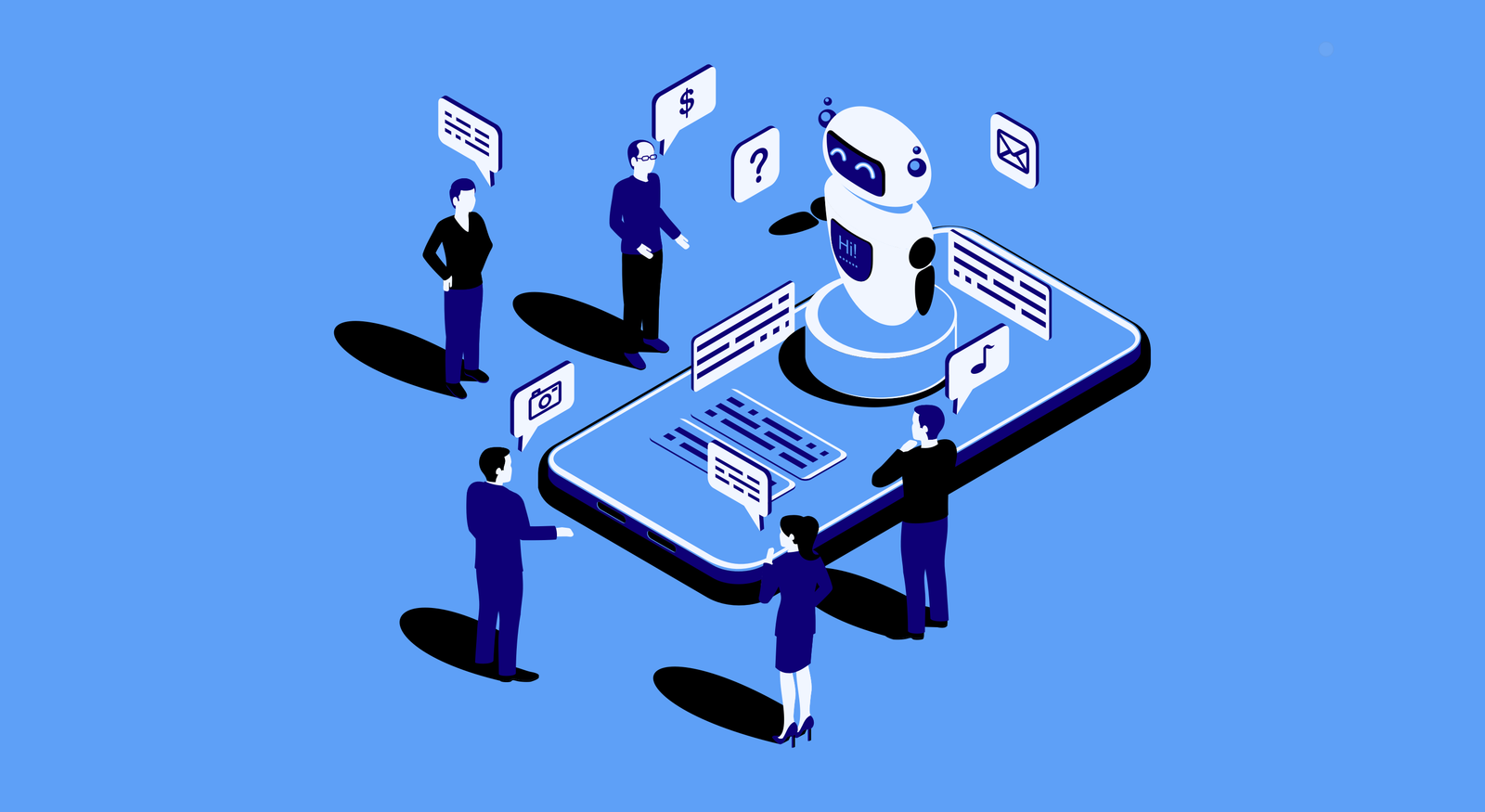
AI chatbots and virtual assistants can answer common questions around the clock, including:
- Where is my order?
- What is your return policy?
- Is this product available?
- When will my order arrive?
- Which size should I choose?
Generative AI makes these interactions more conversational than traditional rule-based chatbots.
More importantly, AI can connect customer-service conversations with order history, product information, and inventory data.
This means an AI assistant can potentially move from simply answering questions to helping customers complete tasks.
For example, instead of telling a customer how to return an item, an AI assistant could guide them through the return process.
5. Computer Vision Is Changing Physical Stores
AI is not limited to online retail.
Computer vision is enabling retailers to analyze physical stores in new ways.
Cameras and sensors can help identify patterns such as:
- Shelf availability
- Customer movement
- Product placement
- Queue lengths
- Store traffic
- Checkout activity
AI can then turn these signals into operational insights.
For example, if a popular product repeatedly disappears from a shelf even though inventory records show that units are available, computer vision can help identify a potential replenishment problem.
AI-powered checkout and cashierless retail technologies are another example of how computer vision can reduce friction in physical stores.
6. Smarter Supply Chains
Retail supply chains are complex networks involving manufacturers, suppliers, warehouses, transportation providers, distribution centers, and stores.
A disruption at one point can affect the entire system.
AI can help retailers predict and respond to supply-chain issues by analyzing demand patterns, transportation information, supplier performance, inventory levels, and external factors.
Predictive analytics can help answer questions such as:
What happens if demand increases by 20%?
Which distribution center is likely to face capacity constraints?
Which supplier presents the greatest risk?
How should inventory be redistributed across locations?
This can make supply chains more resilient and responsive.
7. Generative AI for Retail Employees
AI's impact is not limited to customers.
Retail employees can also use AI to work more efficiently.
A store associate could ask an AI assistant:
"Where can I find this product in the store?"
Or:
"What are the key differences between these two products?"
A merchandising team could use generative AI to create product descriptions.
A marketing team could generate campaign concepts and personalized content.
A manager could ask an AI system to summarize store performance and identify unusual changes in sales.
In this way, AI becomes a productivity layer across the organization.
8. AI Is Transforming Retail Marketing
Retail marketing has traditionally relied heavily on segmentation.
Customers might be divided into groups based on demographics, purchase history, or broad behavioral characteristics.
AI enables retailers to move toward more dynamic personalization.
Machine learning can identify patterns in customer behavior and predict which products, promotions, or messages may be most relevant to different shoppers.
Generative AI can then help create content at scale.
A retailer might use AI to produce different versions of a product description, email, advertisement, or recommendation based on the customer's context.
This allows marketing teams to move from one message for many customers toward more relevant experiences for individual customers.
9. Fraud Detection and Loss Prevention
Retailers also use AI to detect suspicious behavior.
Machine-learning models can identify unusual patterns across transactions and customer activity.
Potential applications include:
- Payment fraud detection
- Account takeover prevention
- Return fraud detection
- Unusual purchasing behavior
- Inventory loss detection
AI does not necessarily replace human investigation. Instead, it can help teams prioritize the transactions and situations that deserve closer attention.
10. Visual Search and Virtual Try-On
Shopping is becoming increasingly visual.
AI-powered visual search allows customers to upload an image and find similar products.
For example, someone might see a jacket they like and use an image-based shopping tool to discover similar styles available from a retailer.
Virtual try-on technologies can also help customers visualize products before buying them.
These experiences can be particularly valuable in categories such as fashion, beauty, eyewear, and furniture.
The objective is simple: reduce uncertainty and make online shopping feel more interactive.
11. AI Is Helping Reduce Retail Waste
Retailers often deal with products that have limited shelf lives or rapidly changing demand.
Food waste is a major example.
AI can improve demand forecasting and help retailers determine how much inventory to order and when.
For fashion retailers, AI can help identify changing trends earlier, potentially reducing the production of products that customers do not want.
Better forecasting, inventory allocation, and markdown optimization can therefore contribute not only to profitability but also to more sustainable retail operations.
The Data Foundation Behind Retail AI
There is an important reality behind all of these applications:
AI is only as useful as the data supporting it.
A retailer may have sophisticated AI models, but if customer, product, inventory, and transaction data exists in disconnected systems, delivering reliable AI experiences becomes difficult.
Successful retail AI therefore requires a strong data foundation.
Retailers need to connect information from:
Customers + Products + Inventory + Transactions + Supply Chain + Marketing + Store Operations
When these sources can work together, AI can develop a more complete understanding of the retail business.
This is why modern retail AI strategies increasingly focus on data integration, real-time data, governance, and unified data architectures alongside AI models.
Challenges Retailers Need to Consider
AI offers enormous opportunities, but implementation is not without challenges.
Data quality
Poor or inconsistent data can produce unreliable predictions and recommendations.
Privacy
Retailers handle sensitive customer information and must ensure that data is collected and used responsibly.
Integration
AI systems often need to connect with existing ERP, CRM, e-commerce, inventory, and point-of-sale systems.
Employee adoption
Employees need training and clear processes for using AI effectively.
Trust and transparency
Customers and employees need to understand when AI is being used and how important decisions are being made.
Cost and scalability
AI initiatives need to demonstrate measurable business value and scale beyond isolated pilots.
The Future of AI in Retail
The next stage of retail AI will be less about individual AI features and more about connected intelligence.
Imagine a retail system that can detect increasing demand for a product, predict a potential stockout, recommend inventory transfers, adjust a marketing campaign, and help a customer discover alternatives—all through interconnected AI systems.
That is where retail is heading.
AI agents may increasingly move beyond answering questions and begin coordinating workflows across merchandising, supply chain, marketing, customer service, and store operations.
The retailer of the future will not simply use AI.
It will operate with AI embedded throughout its business processes.
Conclusion
AI is transforming retail every day.
It is helping retailers understand customers better, predict demand, manage inventory, optimize pricing, improve customer service, detect fraud, empower employees, and create more personalized shopping experiences.
But the biggest opportunity is not any single AI application.
It is the ability to connect these capabilities into one intelligent retail ecosystem.
The retailers that succeed will be those that combine high-quality data, strong technology foundations, responsible AI, and human expertise.